
How long will a portable power station run a refrigerator?
Divide the power station’s usable watt-hours by the refrigerator’s average watts. Find the average by dividing the yearly kWh on the EnergyGuide label by 8,760 hours. A refrigerator rated 600 kWh per year averages about 68 W, so a 2,000 Wh station runs it for roughly 25 hours.
Part of our home backup planning guides. Start with How to size a battery backup system for your home.
What is the formula?
Runtime in hours = usable capacity in watt-hours ÷ average draw in watts. Two parts of that need a little work: the refrigerator’s average draw, and how much of the power station’s rated capacity you can actually use.
How do I find my refrigerator’s average power draw?
Use the yellow EnergyGuide label. The Federal Trade Commission requires refrigerator labels to show estimated yearly electricity use in kilowatt-hours. Divide that number by 8,760, the hours in a year, and multiply by 1,000 to get average watts.
For example, a refrigerator labeled 600 kWh per year uses 600,000 Wh ÷ 8,760 h ≈ 68 W on average. The compressor draws much more while it runs, but it cycles off for long stretches, and the average is what drains the battery.
No label? The Department of Energy suggests taking the refrigerator’s rated wattage and assuming it runs about one third of the time. A 150 W refrigerator would then average around 50 W.
How much of the rated capacity can I use?
Some energy is lost converting stored DC battery power to 120 V AC for the refrigerator. We plan with 85% of the rated capacity to leave room for those losses. A 2,000 Wh station gives about 1,700 Wh of usable AC energy on that basis.
How long will common sizes last?
| Power station capacity | Usable at 85% | Estimated runtime |
|---|---|---|
| 1,152 Wh (for example, BLUETTI AC180 class) | 979 Wh | About 14 hours |
| 2,000 Wh | 1,700 Wh | About 25 hours |
| 3,840 Wh (for example, Anker SOLIX F3800 class) | 3,264 Wh | About 48 hours |
What makes real runtime shorter or longer?
- A hot kitchen and frequent door openings make the compressor run more, shortening runtime.
- The EnergyGuide figure is a test-condition estimate, and the FTC notes your own use will differ.
- Keeping the doors closed and the refrigerator full helps it hold temperature between compressor cycles.
- Solar charging during the day adds energy back; see our guide to charging a power station with solar panels.
Also check the station’s surge rating. The compressor needs a brief burst of power to start, and a station with enough capacity but too little surge output will trip off every time the compressor kicks on. For whole-day planning across several appliances, use our guide to sizing a home battery backup.
Products to consider
Examples from our catalog that fit this guide. Check each product’s specifications against your own numbers before you order.
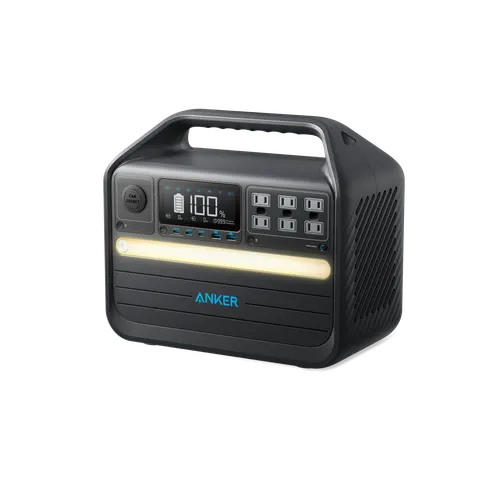
Anker SOLIX
Anker 555 PowerHouse - 1024Wh | 1000W
With 1024Wh of capacity and 1000W of output, the Anker 555 PowerHouse steps up to larger loads than compact models. LiFePO4 batteries and InfiniPower technology are designed for a long service life.
$764.99
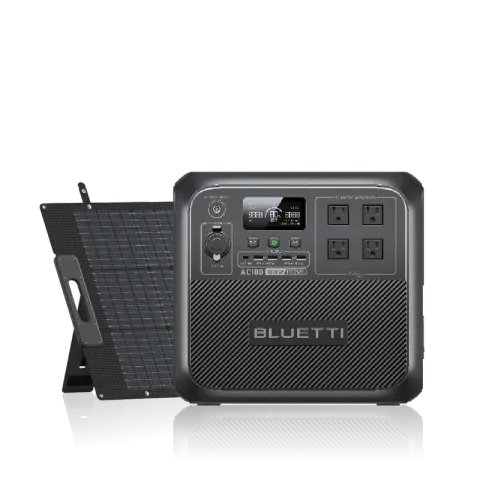
BLUETTI
BLUETTI AC180 Solar Generator | 1,800W 1,152Wh
Listed as a solar generator, the BLUETTI AC180 provides 1,800W of AC output from a 1,152Wh battery. It is a mid-size unit for campers, RV owners and households that want quiet backup power.
$577.15
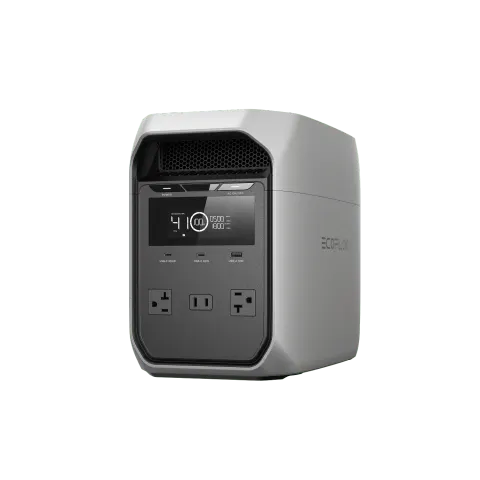
EcoFlow
EcoFlow DELTA 3 Classic Portable Power Station (1024Wh)
With 1024Wh of LFP storage and 1800W of output, the EcoFlow DELTA 3 Classic is a compact power station for home backup and outdoor use. It runs quietly and switches to battery power in 10ms, which makes it a good match for sensitive electronics.
$449.10
Frequently asked questions
Can a 1,000 Wh power station run a refrigerator overnight?
Usually yes for an efficient refrigerator. A model averaging 68 W needs about 816 Wh for 12 hours, and a 1,000 Wh station provides roughly 850 Wh after losses. Older or larger refrigerators that use more energy may not make it through the night.
Does a refrigerator need a pure sine wave inverter?
Compressor motors run best on pure sine wave power, which is what most current portable power stations produce. Check that the station lists pure sine wave AC output and that its surge rating covers the refrigerator’s startup draw.
Should I run a freezer and refrigerator from the same power station?
You can if the station’s continuous output covers both compressors and its surge rating covers one starting while the other runs. Add both appliances’ average watts together to estimate runtime; the combined draw will roughly halve the hours compared with the refrigerator alone.