How to size a battery backup system for your home
Size a home battery backup in two steps. Add the running watts of everything you want on at the same time; that sets the inverter output. Then multiply each device’s watts by the hours it will run and add them up; that sets the battery capacity in watt-hours. Add about 20% for losses and reserve.
Which two numbers decide the size of a backup system?
Every battery backup has an output rating in watts (W) and a storage rating in watt-hours (Wh) or kilowatt-hours (kWh). Watts are how much power it can deliver at one moment. Watt-hours are how long it can keep delivering. A system with plenty of storage but a small inverter will shut off when you start the microwave; a large inverter on a small battery will run everything for an hour and then go dark.
So you size them separately. Output comes from the loads that run at the same time. Capacity comes from the energy those loads use over the length of the outage you are planning for.
How do I find out what my appliances use?
Look for the wattage on the appliance nameplate, in the manual, or on the power adapter. If only amps are listed, multiply amps by the voltage (120 V for a standard US outlet) to get watts. For energy use, the Department of Energy’s formula is simple: watts × hours used per day ÷ 1,000 = kilowatt-hours per day.
Refrigerators and freezers need one adjustment. Their compressors cycle on and off, so the DOE suggests dividing the time they are plugged in by three to estimate how long they actually run at full wattage. Twenty-four hours plugged in becomes about eight hours of running time.
What does a worked example look like?
Here is a 24-hour plan for keeping the essentials on in a typical home. The wattages are round example figures; swap in the numbers from your own labels.
| Appliance | Running watts | Hours per day | Watt-hours |
|---|---|---|---|
| Refrigerator (24 h ÷ 3) | 150 W | 8 | 1,200 Wh |
| Chest freezer (24 h ÷ 3) | 100 W | 8 | 800 Wh |
| LED lights, 6 bulbs at 10 W | 60 W | 6 | 360 Wh |
| Modem and Wi-Fi router | 20 W | 24 | 480 Wh |
| TV | 100 W | 4 | 400 Wh |
| Laptop and phone charging | 65 W | 3 | 195 Wh |
| Total | 495 W | 3,435 Wh |
The inverter needs to cover 495 W if everything happens to run at once, plus the startup surge from the refrigerator and freezer compressors. Motors draw a short burst well above their running watts when they start, so check the surge rating on any system you consider. For capacity, 3,435 Wh plus 20% for inverter losses and a reserve comes to about 4,100 Wh, or 4.1 kWh, for one day.
How many days of backup should I plan for?
Multiply your daily figure by the number of days you want to cover without recharging. In the example, two days is about 8.2 kWh. If you add solar charging, each sunny day refills part of the battery, which can cut the storage you need. Our guide to charging a power station with solar panels shows how to estimate that.
Portable power station or whole-home system?
- A portable power station suits plans like the example above: 120 V loads you can plug directly into the unit, under a few kilowatt-hours a day.
- A whole-home system suits 240 V loads such as well pumps, central air conditioning, and electric ranges, or plans where you want circuits to switch over without running extension cords.
- Some portable units can be expanded with extra batteries or connected to a home panel through a transfer switch, which sits between the two options.
Products to consider
Examples from our catalog that fit this guide. Check each product’s specifications against your own numbers before you order.
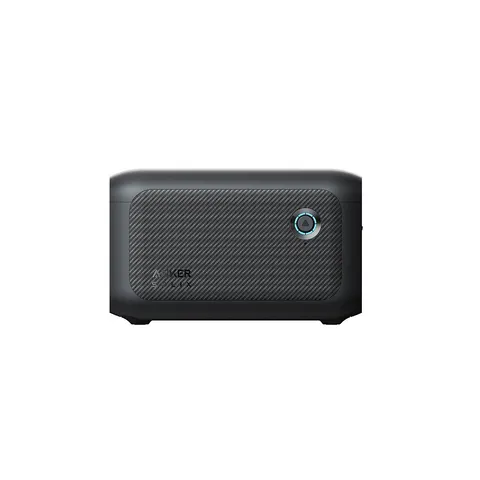
Anker SOLIX
Anker | SOLIX BP1000 Expansion Battery 1056Wh LFP | For SOLIX C1000 | A1761B
The Anker SOLIX BP1000 is a 1,056Wh LFP expansion battery made to pair with the SOLIX C1000. It adds capacity to a C1000 for longer outages or trips.
$356.93
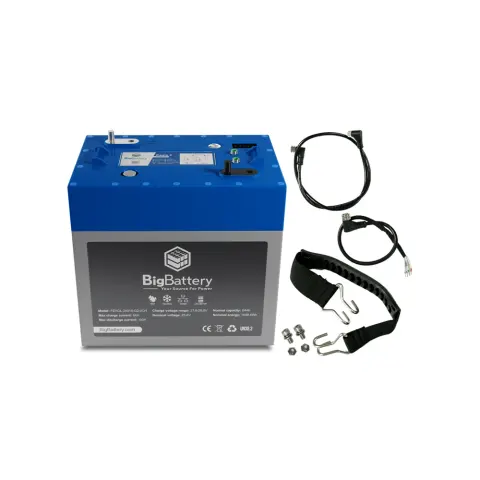
BigBattery
BigBattery | 24V EAGLE 2 | LiFePO4 Lithium Battery 1.63kWh | For Boats & Motorcycles
BigBattery's 24V EAGLE 2 is a compact LiFePO4 battery with 1.63kWh of storage. It is designed as a drop-in replacement for lead-acid batteries in low-voltage mobile systems.
$552.50
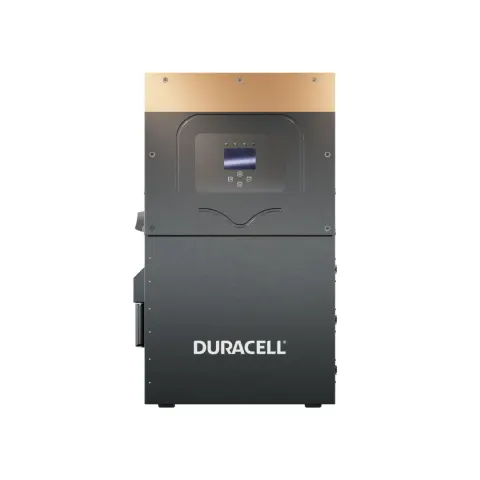
Duracell
Duracell Power Center 15kW Hybrid Inverter
At the centre of a Duracell solar and storage system sits the Power Center Max Hybrid 15 kW inverter. It manages solar, battery and grid power and delivers 15,000 W continuous for homes or businesses.
$5,109.38
EcoFlow
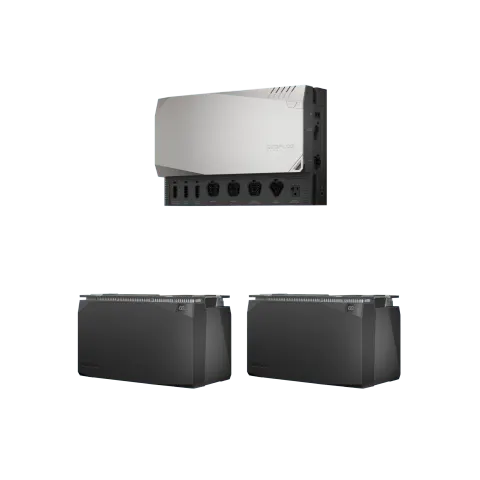
EcoFlow 10kWh Power Kits
The 10kWh version of EcoFlow's Power Kits is a 48V system built around an all-in-one inverter hub with stackable batteries. It suits RV and off-grid owners who want several ways to charge.
$9,374.25
Frequently asked questions
How many kWh do I need to back up a refrigerator?
Check the yearly kWh figure on the refrigerator’s EnergyGuide label and divide it by 365. A label showing 600 kWh per year works out to about 1.6 kWh per day. Add around 20% for inverter losses, so plan on roughly 2 kWh of battery for each day of backup.
Is running watts or surge watts more important?
Both matter. Running watts must cover everything on at once, and the surge rating must cover the brief startup spike of motors in refrigerators, freezers, pumps, and air conditioners. If the surge rating is too low, the inverter shuts off when a compressor starts even though the running load is well within limits.
Can a battery backup run central air conditioning?
Usually only a whole-home system with 240 V output, enough continuous watts for the compressor, and a surge rating that covers its start. Many homes also add a soft-start device to the air conditioner to lower that surge. Confirm the unit’s nameplate figures with your installer before choosing a system.